July 24, 2026

 Written by Jason Letts
“`html
The streaming television landscape has evolved dramatically, with 4K IPTV emerging as a popular alternative to traditional cable and satellite services. If you’re searching for “4kiptv” or exploring 4K internet television options, you’ve likely encountered multiple providers claiming to offer thousands of channels and ultra-high-definition streaming quality. This comprehensive guide examines what 4K IPTV actually means, explores the various providers using similar branding, and helps you understand the technology behind these services.
Internet Protocol Television (IPTV) delivers television content through internet connections rather than traditional broadcast methods. When combined with 4K resolution capabilities, these services promise ultra-high-definition streaming at 3840×2160 pixels. The technology relies on internet protocols to stream live television channels, video-on-demand content, and premium entertainment directly to compatible devices.
Modern 4K IPTV services utilize advanced compression standards like HEVC (H.265) to deliver high-quality video streams while managing bandwidth efficiently. This codec technology enables providers to offer true 4K resolution without excessive data consumption, making ultra-high-definition content accessible to users with standard broadband connections.
The appeal of 4K IPTV lies in its ability to consolidate multiple entertainment sources into a single platform. Users can access live television channels, sports programming, movies, and series through one subscription, eliminating the need for multiple streaming service accounts.
Several providers operate under the “4kiptv” branding umbrella, each targeting specific markets and content preferences. 4K IPTV LIVE, accessible through 4kiptvlive.com, positions itself as a comprehensive service offering over 20,000 live television channels with 4K/UHD quality and a claimed 99% uptime guarantee. Their content library includes sports programming, news channels, pay-per-view events, movies, and video-on-demand titles with electronic program guide integration.
Similarly, 4K Live IPTV operates through 4kiptvlive.io, marketing access to 20,000+ live television channels in UHD quality with identical uptime promises. The marketing materials suggest either shared infrastructure or coordinated branding strategies across multiple domains.
The 4kiptv.net service, often styled as “4K IPTV Official USA,” targets American audiences specifically. Their positioning emphasizes thousands of live channels and trending entertainment content within a single affordable subscription plan, focusing on consolidation of viewing options rather than overwhelming channel counts.
Live4kiptv.com promotes “4K Live IPTV 2026” services, emphasizing live sports access, USA IPTV channels, blockbuster movies, and extensive VOD libraries in 4K UHD quality. Their feature set includes full EPG functionality, catch-up television capabilities, and bundled IPTV applications for enhanced user experience.
The 4K Player app, available through 4kplayer.app, functions as an IPTV client application optimized for Samsung Smart TVs, LG Smart TVs, Android TV platforms, and Amazon Fire TV devices. These applications serve as front-end interfaces for IPTV services, requiring separate subscription credentials to access content libraries.
Device compatibility extends across multiple platforms, including Nvidia Shield, Android TV boxes, TiviMate, and IPTV Smarters applications. This broad compatibility ensures users can access 4K IPTV content on their preferred viewing devices without platform restrictions.
4K IPTV providers consistently advertise substantial content libraries, with channel counts reaching 20,000+ live channels and VOD collections exceeding 40,000-60,000 titles. These numbers encompass international programming, premium sports channels, news networks, entertainment content, and movie collections spanning multiple genres and languages.
Sports programming represents a significant draw for 4K IPTV services, with providers emphasizing live NFL, NBA, Premier League, and other major sporting events. The promise of 4K resolution for sports content appeals to viewers seeking enhanced visual quality for live events where detail and clarity matter most.
Video-on-demand libraries typically include recent movie releases, television series box sets, and premium content that mirrors offerings from major streaming platforms. The catch-up television feature allows viewers to access previously aired programming, extending content availability beyond live broadcast schedules.
Electronic Program Guide (EPG) integration provides scheduling information and program descriptions, making channel navigation more intuitive. This feature bridges the gap between traditional television viewing experiences and internet-based content delivery.
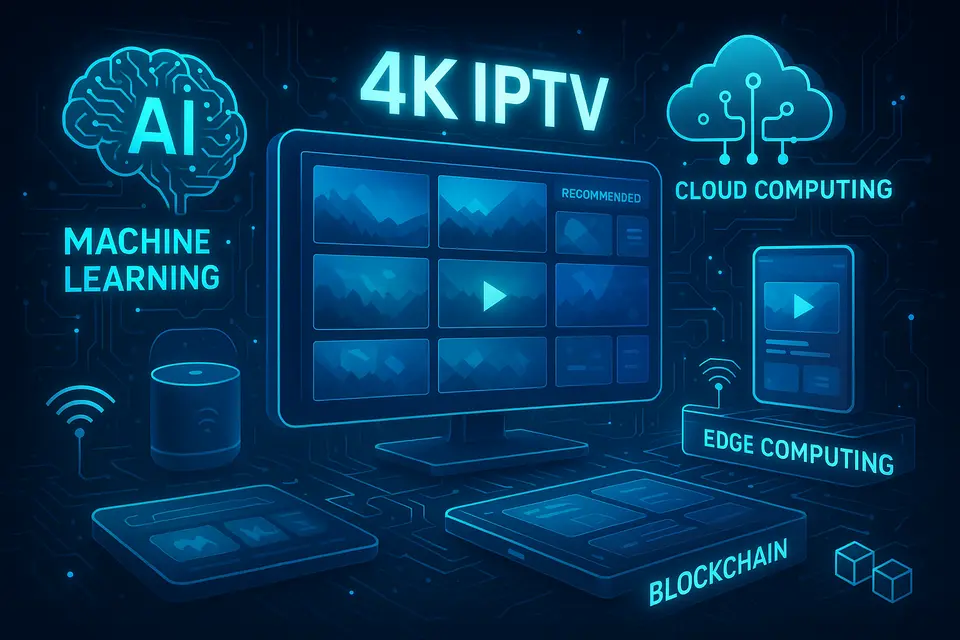
Modern IPTV platforms increasingly incorporate artificial intelligence and machine learning algorithms to enhance user experiences. AI-powered recommendation engines analyze viewing patterns to suggest relevant content, while automated quality optimization adjusts stream parameters based on network conditions and device capabilities.
Content discovery benefits from natural language processing algorithms that improve search functionality across vast content libraries. These AI systems help users locate specific programming more efficiently, whether searching by genre, actor, director, or content themes.
Advanced IPTV services implement machine learning models to optimize content delivery networks dynamically. These systems analyze user locations, internet service provider characteristics, and device specifications to route streams through optimal pathways, reducing latency and improving overall streaming quality.
Predictive caching algorithms anticipate popular content requests, pre-positioning frequently accessed videos closer to end users. This approach reduces initial loading times and ensures smoother playback initiation for high-demand programming.
Quality adaptation algorithms continuously monitor bandwidth availability and automatically adjust video resolution, bitrate, and compression settings to maintain uninterrupted viewing experiences. This technology proves particularly valuable for 4K content, which requires substantial bandwidth for optimal delivery.
4K IPTV services rely on sophisticated content delivery networks (CDN) to distribute high-bandwidth video streams efficiently. These networks utilize geographically distributed servers to minimize latency and ensure consistent streaming quality across different regions and internet service providers.
HEVC (H.265) compression technology enables 4K video delivery at manageable file sizes, typically reducing bandwidth requirements by 25-50% compared to older H.264 standards. This efficiency improvement makes 4K streaming accessible to users with moderate internet connections while maintaining visual quality.
Adaptive bitrate streaming automatically adjusts video quality based on real-time network conditions. When bandwidth fluctuates, the system seamlessly transitions between different quality levels to prevent buffering interruptions, ensuring continuous playback even during network congestion.
Backend operations for large-scale IPTV services increasingly utilize robotic process automation (RPA) to manage content ingestion, metadata processing, and quality control workflows. These automated systems handle routine tasks like content categorization, thumbnail generation, and schedule management without manual intervention.
Automated monitoring systems continuously check stream health across thousands of channels simultaneously. When technical issues arise, these systems can automatically switch to backup sources or alert technical teams for rapid resolution.
The IPTV landscape includes both legitimate licensed providers and services operating in legal gray areas. When evaluating 4K IPTV options, understanding the regulatory environment and licensing status becomes crucial for making informed decisions.
Licensed IPTV providers typically display clear partnerships with content creators, transparent pricing structures, and established customer support channels. They operate under regulatory oversight and maintain proper content distribution agreements with rights holders.
Services offering extensive channel packages at significantly below-market pricing may operate without proper licensing agreements. While these services might deliver promised content, users should understand potential legal implications and service continuity risks.
Modern IPTV infrastructure relies heavily on cloud computing platforms for scalability and reliability. Cloud-based architectures enable providers to handle sudden traffic spikes, such as during major sporting events, without service degradation.
Distributed cloud deployments across multiple geographic regions ensure service continuity even during localized infrastructure issues. This redundancy supports the “99% uptime” guarantees frequently marketed by 4K IPTV providers.
Serverless computing architectures allow IPTV services to scale resources dynamically based on demand patterns. During low-usage periods, resources automatically scale down to reduce operational costs, while peak viewing times trigger automatic capacity expansion.
The convergence of artificial intelligence, 5G networks, and edge computing technologies promises significant improvements in IPTV service delivery. AI-driven content personalization will become more sophisticated, offering highly tailored viewing experiences based on individual preferences and viewing history.
Edge computing deployment brings content processing closer to end users, reducing latency and enabling new interactive features. This technology particularly benefits 4K streaming, where reduced latency improves user experience and enables more responsive interfaces.
Integration with smart home ecosystems and Internet of Things (IoT) devices will expand IPTV accessibility. Voice control, automated content recommendations based on daily routines, and seamless device switching will become standard features across 4K IPTV platforms.
Blockchain technology may revolutionize content licensing and royalty distribution, potentially enabling more transparent and efficient content marketplace operations. This could lead to broader content availability and more competitive pricing structures across the industry.
The evolution toward 8K resolution and virtual reality content integration represents the next frontier for premium IPTV services. While 4K adoption continues growing, forward-thinking providers are already preparing infrastructure for these advanced formats.
When evaluating 4K IPTV options, consider technical specifications, content licensing status, and long-term service reliability. The technology offers genuine benefits for cord-cutters seeking comprehensive entertainment solutions, but informed decision-making requires understanding both capabilities and limitations of different service models. Whether choosing established licensed providers or exploring alternative options, prioritize services that align with your legal comfort level, technical requirements, and entertainment preferences.
4K IPTV delivers television content in ultra-high-definition through internet protocols, offering improved visual quality and a wide selection of channels and on-demand content.
HEVC (H.265) compression allows for high-quality video streaming without excessive data consumption, making 4K content accessible with standard broadband connections.
Yes, 4K IPTV services are compatible with a variety of devices, including smart TVs, streaming boxes, and mobile devices through dedicated apps or IPTV clients.
Consider the service’s legal standing, content offerings, technical compatibility, and customer support availability. Check for geographic restrictions and content licensing agreements.
Future trends include AI-driven content recommendations, 5G and edge computing integration, wider IoT connectivity, and potential blockchain applications for content licensing.
“`
© 2026 iPvos All Rights Reserved | Terms | Privacy Policy | Refund Policy | Copyright Disclaimer | Affiliate Program| Blog