July 24, 2026

 Written by Jason Letts
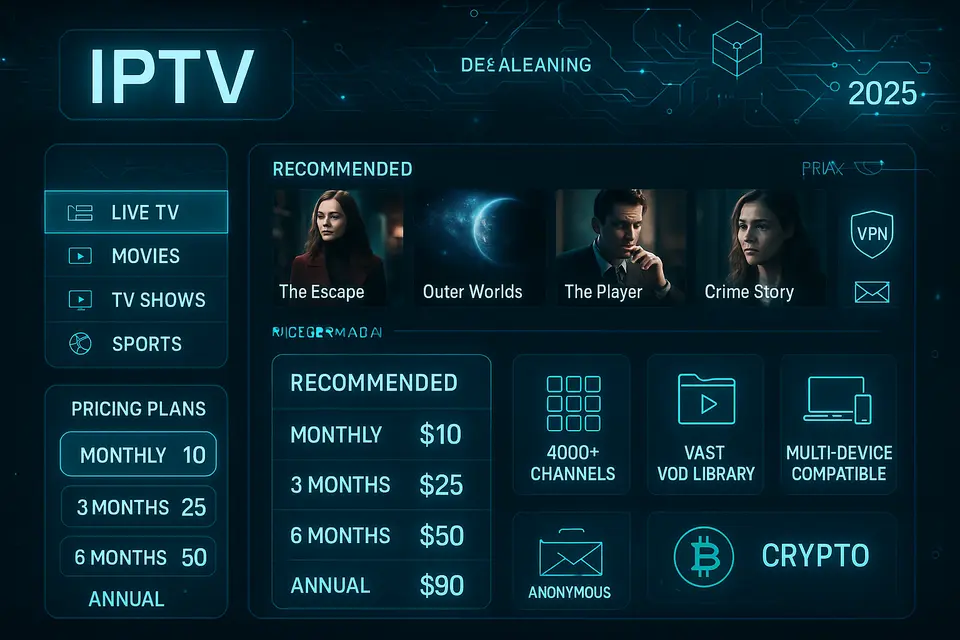
Shopping for IPTV subscription deals feels like stepping into a parallel universe where thousands of channels cost less than your morning coffee habit. You see ads promising 50,000+ live channels for $4.66 monthly, while legitimate services like YouTube TV charge $82.99 for 100+ channels. What gives?
The IPTV marketplace splits into two distinct worlds with vastly different pricing structures, legal standings, and value propositions. Gray-market providers offer massive channel lineups at rock-bottom prices, while fully licensed streaming services provide legal peace of mind at premium rates. Understanding these differences helps you navigate IPTV deals without falling into common traps.
Independent IPTV sellers dominate online forums, social media groups, and search results with eye-catching price points. These services typically charge around $15-$20 monthly for comprehensive packages including thousands of live channels and video-on-demand libraries.
Recent cost analysis shows the average monthly price across leading IPTV providers sits at $15.40. Source However, the real deals emerge when you prepay for longer periods:
One user review documented paying approximately $15 monthly for 10,000+ channels including premium sports packages, which represents typical value in this market segment.
When factoring additional privacy tools, realistic monthly costs increase. A comprehensive breakdown including VPN services and anonymous email accounts totals around $19.89 monthly:
Licensed IPTV-style services operate in completely different price territory, reflecting their content licensing costs and consumer protections:
Legal services typically range $20-$50 monthly for basic packages, compared to $50-$100 for traditional cable and $60-$120 for satellite TV. Source
Modern IPTV platforms increasingly rely on artificial intelligence algorithms to enhance user experience and content recommendation systems. These machine learning applications analyze viewing patterns, preferences, and behavior to deliver personalized channel suggestions and improve electronic program guide accuracy. Source
AI-powered systems help IPTV providers optimize streaming quality by predicting network congestion and automatically adjusting bitrates. This technology particularly benefits services managing massive channel inventories, where traditional manual curation becomes impractical.
Real providers illustrate typical pricing structures across the IPTV landscape. These examples represent market patterns rather than endorsements.
Nomad IPTV demonstrates standard tiered pricing:
IPTV USA Prime advertises aggressive pricing:
These services commonly advertise 15,000-55,000+ live channels with extensive VOD catalogs featuring 100,000-170,000+ titles. Source Source
Most providers offer 24-hour free trials or short paid testing periods, allowing performance evaluation before commitment. Source
IPTV services increasingly implement robotic process automation for subscription management, billing, and customer onboarding. These automated systems handle account provisioning, payment processing, and basic technical support through chatbots and scripted responses.
Automation helps providers maintain low operational costs, contributing to competitive pricing structures. However, this same automation often results in limited human customer support, particularly among gray-market services.
Completely free, legal IPTV applications provide substantial value without subscription commitments. Pluto TV, Plex, Tubi, and Samsung TV Plus offer curated live channels including news, lifestyle programming, movies, and themed content at zero cost.
These ad-supported services lack premium live sports or recent cable network content but satisfy many viewers’ entertainment needs. They represent the most risk-free entry point into IPTV consumption.
“Plug-and-play” streaming boxes offer another approach, marketed as one-time hardware purchases providing thousands of live channels without monthly subscriptions. However, these devices frequently access unlicensed content streams, creating potential legal complications.
Advanced IPTV platforms integrate natural language processing capabilities enabling voice search and conversational content discovery. Users can search for programming using casual speech patterns rather than exact titles or rigid command structures.
This NLP integration particularly benefits international IPTV services managing content across multiple languages and regions, automatically translating search queries and matching content regardless of original language.
The dramatic price difference between IPTV subscriptions and traditional cable stems from fundamental business model differences. Average cable bills exceed $127 monthly, while quality IPTV services average around $15.40 monthly.
Gray-market IPTV providers achieve these low prices by retransmitting broadcast and cable channels without comprehensive licensing agreements. This allows them to offer “every sport, every pay-per-view, channels from every country” for $15-$30 monthly, compared to much higher legal licensing costs.
Licensed services must pay content creators, sports leagues, and broadcast networks for distribution rights. These legitimate costs explain why YouTube TV charges $82.99 for channel packages that gray-market services bundle for $15.
Sophisticated IPTV platforms employ computer vision algorithms for automated content categorization, thumbnail generation, and quality assurance monitoring. These systems can identify sports events, movie genres, and programming types without manual tagging.
Computer vision technology also enables automatic detection of streaming issues, buffering problems, and video quality degradation across massive channel inventories, allowing rapid technical response.
Smart IPTV deal evaluation requires balancing multiple factors beyond headline pricing. Consider these key comparison points:
Licensed services (YouTube TV, Sling, Hulu + Live TV, Fubo, Philo) provide legal certainty but command premium pricing. Gray-market services offer dramatic savings but carry shutdown risks, potential copyright violations, and often require VPN usage plus anonymous email accounts. Source Source
Month-to-month subscriptions at $10-$20 provide flexibility, while 6-24 month commitments drop costs to $4-$10 monthly. However, experts often recommend avoiding long-term commitments since providers can disappear or degrade service quality over time.
Sports-focused viewers should expect higher costs. Philo keeps prices low by excluding sports channels entirely, while Fubo’s premium pricing reflects comprehensive sports coverage including regional networks and pay-per-view events.
International content, movie libraries, and premium networks vary significantly between providers. Match your content priorities to service strengths rather than choosing based solely on channel count.
Modern IPTV platforms leverage deep learning neural networks to analyze viewing behavior, predict content preferences, and optimize user engagement. These systems process massive datasets including watch time, channel switching patterns, and content completion rates.
Deep learning algorithms become more accurate over time, learning individual user preferences and household viewing patterns to surface relevant content from vast channel inventories.
Contemporary IPTV subscription deals typically bundle several advanced features:
Massive Channel Inventories:
Services commonly advertise 10,000-35,000+ channels, with some claiming 50,000+ including international, premium, and specialty networks.
Extensive VOD Libraries:
Movie and TV show collections often exceed 100,000 titles with regular content updates and multiple quality options.
Multi-Device Compatibility:
Modern services support Smart TVs, Amazon Fire TV, Android TV boxes, mobile devices, and specialized set-top boxes through dedicated applications.
Advanced EPG Integration:
Electronic program guides integrate with third-party applications like TiviMate, providing cable-style interfaces, favorites management, and DVR-like functionality. Source
Reliability Claims:
Marketing emphasizes “99.9% uptime,” “anti-freeze technology,” and “buffer-free streaming” with VPN compatibility for privacy-conscious users. Source
Progressive IPTV providers increasingly accept cryptocurrency payments and implement blockchain-based subscription management for enhanced privacy and security. These payment methods particularly appeal to users seeking anonymous transactions and protection from payment processor restrictions.
Blockchain integration also enables decentralized content verification and transparent pricing structures, though adoption remains limited to technically sophisticated providers.
IPTV subscription deals present compelling value propositions across legal and gray-market segments. Legal services like Philo ($20 monthly) and Sling TV ($25+ monthly) provide legitimate alternatives to expensive cable packages. Gray-market providers offer dramatic savings with extensive content libraries but require careful risk assessment.
Start with free legal options like Pluto TV or Tubi to test IPTV compatibility with your viewing habits and technical setup. If you need more content, try short-term subscriptions or trials before committing to annual plans. Source
Consider your content priorities, technical comfort level, and risk tolerance when evaluating deals. Sports fans might find Fubo’s premium pricing worthwhile, while international viewers could benefit from gray-market services’ global channel selection.
The IPTV landscape continues evolving with new providers, pricing models, and technology integration. Stay flexible with subscriptions and regularly reassess your choices as better deals emerge in this dynamic marketplace.
Remember that the cheapest deal isn’t always the best value. Factor in reliability, customer support quality, legal standing, and content relevance to your actual viewing preferences when making subscription decisions.
IPTV, or Internet Protocol Television, is cheaper than traditional cable because it uses the internet to deliver TV content, often without expensive licensing agreements, especially in gray-market offerings.
Yes, legal IPTV options like YouTube TV, Sling TV, and Hulu + Live TV provide licensed content at premium prices but offer legal peace of mind and consumer protections.
Gray-market IPTV services can pose legal risks, including channel shutdowns and privacy issues, due to their practice of retransmitting content without proper licensing.
AI and machine learning enhance IPTV by optimizing content recommendation systems, improving user experiences through viewing pattern analysis, and managing network congestion for better streaming quality.
Yes, you can start with legal, free IPTV options like Pluto TV and Tubi, which offer a variety of ad-supported channels ideal for basic entertainment without legal concerns.
© 2026 iPvos All Rights Reserved | Terms | Privacy Policy | Refund Policy | Copyright Disclaimer | Affiliate Program| Blog